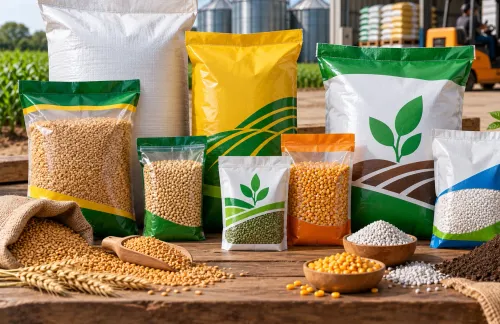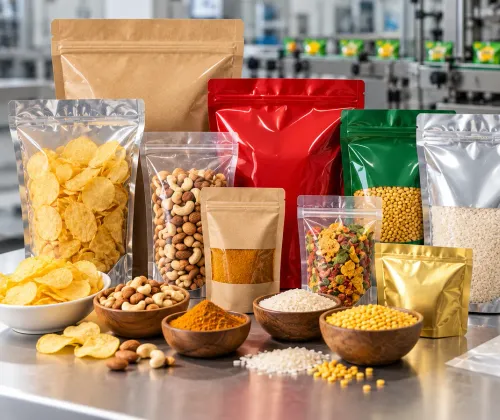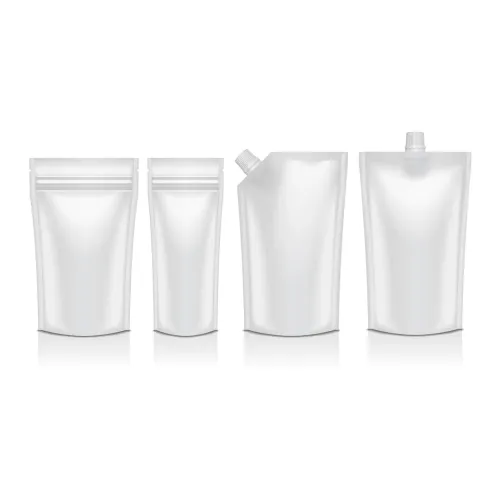
Pouches have become a practical packaging choice for products that require convenience, protection, and efficient shelf presentation. They can accommodate powders, granules, dry foods, snacks, household products, agricultural inputs, and many other goods. However, choosing the right pouch involves more than deciding its size and appearance.
A packaging pouches manufacturer must understand the product, filling process, expected shelf life, distribution method, and customer usage pattern. Each factor influences the pouch material, structure, seal, and opening style.
What Should a Packaging Pouch Protect Against?
Every product reacts differently to external conditions. Dry foods can lose texture when exposed to moisture, powders may leak through weak seals, and strongly scented products may need packaging that limits odour transfer.
The pouch structure should address the most relevant product risks, including:
- Moisture entering or leaving the package
- Exposure to air, dust, or contamination
- Punctures caused by sharp or irregular products
- Seal failure during transportation
- Loss of aroma or product freshness
- Damage caused by repeated handling
Businesses should prioritise actual protection requirements instead of selecting materials solely by thickness or appearance.
Match the Pouch Format with Customer Use
The way customers open, carry, store, and reuse a package affects its suitability. A simple sealed pouch may work for a single-use product, while a resealable format can be more convenient for products consumed gradually.
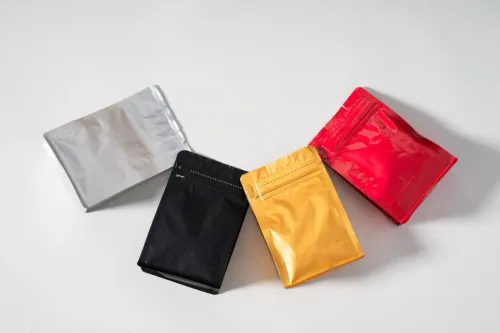
Popular functional options include centre-seal pouches, three-side-seal pouches, stand-up formats, gusseted pouches, and liner-style bags. The correct format depends on filling volume, display requirements, sealing machinery, and storage conditions.
A pouch should also be easy to handle without compromising protection. Features that look attractive but add little practical value may increase packaging complexity and cost.
Check Compatibility with Filling and Sealing
Packaging material must perform consistently during production. A pouch intended for manual filling may have different requirements from one used on automatic or semi-automatic equipment.
Before standardising a pouch, evaluate:
- Ease and speed of filling
- Accuracy of pouch dimensions
- Seal strength and uniformity
- Suitable sealing temperature
- Resistance to tearing during handling
- Performance after stacking and transport
Trial quantities allow production teams to identify operational issues before committing to regular supply.
Packaging Needs of Nagpur-Based Businesses
Food processors, FMCG brands, agricultural suppliers, retailers, and industrial businesses across Nagpur and Maharashtra use pouches for products with widely different characteristics. Local manufacturers may need smaller development quantities initially, followed by planned repeat supplies as demand grows.
Working with a packaging pouches manufacturer in Nagpur can simplify discussions about dimensions, samples, sealing performance, and recurring requirements. It also helps businesses communicate changes when launching a new product or improving an existing pack.
Plastomatic Industries develops packaging formats for varied commercial and industrial applications. Providing a product sample, current pouch, filling quantity, and expected monthly requirement can make the evaluation more focused.
A Practical Final Check
The selected pouch should protect the product, work with the packing process, and remain convenient for the end user. Its performance should be tested after filling, sealing, stacking, and simulated transportation.
Discuss your product characteristics and preferred pouch capacity with Plastomatic Industries to explore a packaging format suited to your operational requirements.
Keywords