

Agricultural packaging operates in demanding conditions. Products may move from processing units to warehouses, distributors, rural dealers, farms, or export channels while facing humidity, dust, repeated handling, plus long storage periods.
An Agriculture Packaging Manufacturer must therefore consider the characteristics of the packed material as well as the conditions it may encounter throughout the supply chain.
Agricultural Products Need Different Packaging Approaches
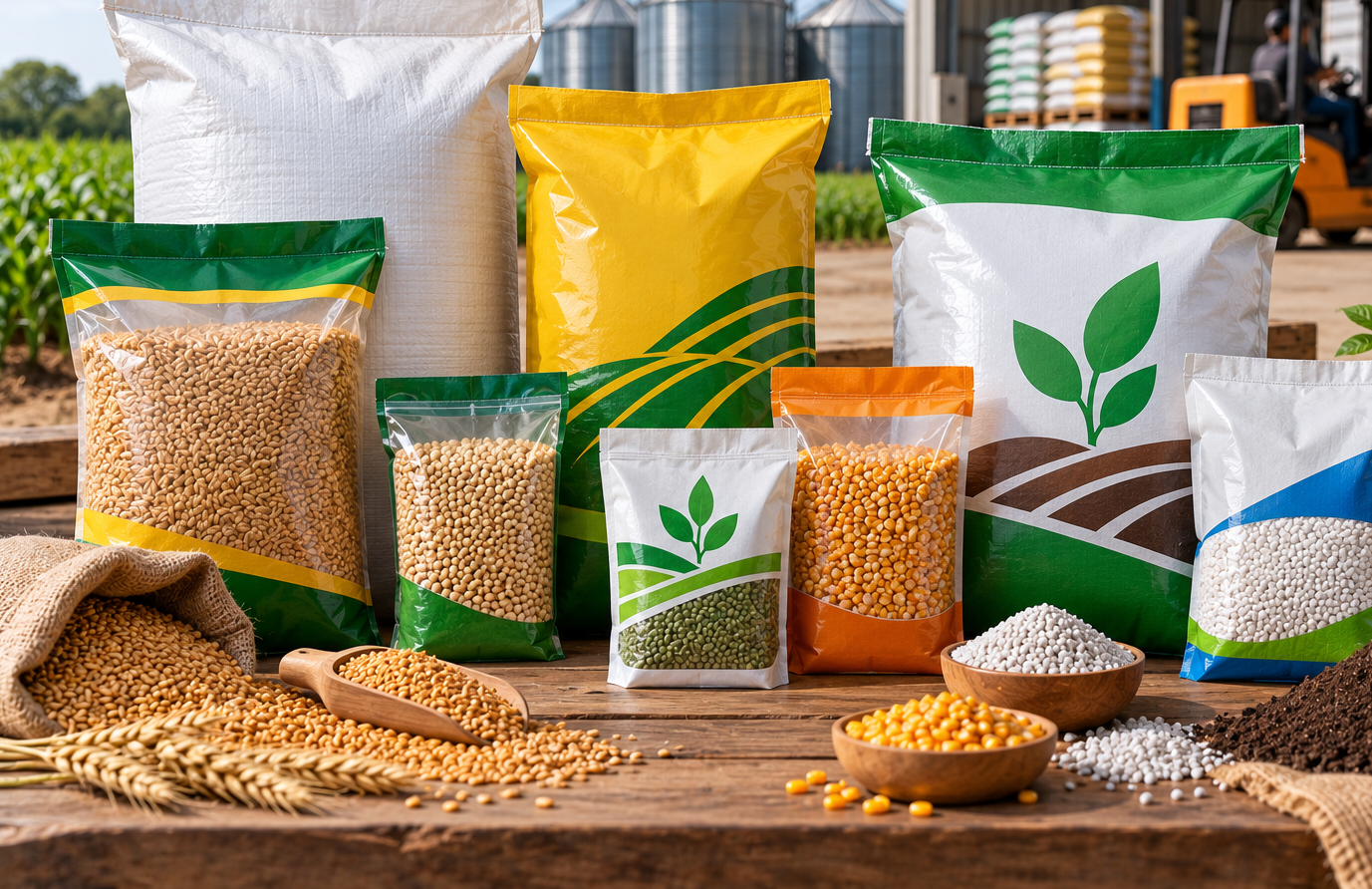
Agriculture is a broad category. Seeds, grains, feed ingredients, soil inputs, fertilizers, plus other products can differ considerably in density, moisture sensitivity, pack weight, plus handling requirements.
A packaging specification suitable for one product should not automatically be used for another.
Before deciding on packaging, define:
- Product type
- Pack weight
- Product density
- Moisture sensitivity
- Storage period
- Distribution method
- Stacking conditions
- Filling process
These details help identify the level of protection plus strength required.
Moisture Can Become a Major Concern
Many agricultural products are stored in warehouses where humidity conditions vary.
Packaging may need to help reduce unwanted moisture exposure depending on the product. However, the required barrier properties should be based on actual product needs plus storage conditions.
Warehouse environment, seasonality, storage duration, plus whether packs are placed near walls or floors can all affect practical packaging performance.
Heavy Packs Require Mechanical Strength
Agricultural products are commonly supplied in larger pack sizes. Increased weight creates additional stress during lifting, loading, stacking, plus transportation.
Packaging should be assessed for tensile performance, puncture resistance, seal strength, plus its ability to tolerate repeated movement.
A bag that remains intact while stationary may behave differently when dropped, dragged, or compressed beneath other packs.
Dimensions Influence Filling Efficiency
Correct dimensions can improve both filling plus storage.
An oversized package may consume unnecessary material, create loose packs, plus reduce stacking efficiency. A small package may be difficult to fill or close properly.
Trial filling with the actual product is particularly valuable for grains, powders, plus materials with varying bulk density.
Distribution Conditions Should Be Discussed
Agricultural products frequently travel beyond urban distribution networks. Road conditions, repeated loading, temporary storage, plus dealer-level handling can introduce stresses that are easy to overlook during packaging development.
Businesses should tell the manufacturer how far products typically travel plus how they are transported.
Nagpur's location within Maharashtra gives agriculture-linked businesses access to multiple regional markets. Packaging intended for such supply chains should be assessed beyond the factory environment.
Branding Still Matters
Agricultural packaging also serves as a product identification plus communication medium.
Printed packs may need space for brand identity, product details, batch information, handling instructions, plus statutory information applicable to the particular product.
Artwork should therefore be developed using the final approved bag dimensions.
Plastomatic Industries supplies flexible packaging solutions for agriculture-linked plus other commercial applications. Businesses discussing requirements with an agriculture packaging manufacturer can improve the development process by sharing samples, expected pack weights, storage details, plus filling conditions.
Agricultural packaging should be treated as part of the supply chain rather than simply a container. Packaging that reflects product behaviour, warehouse conditions, handling patterns, plus transportation requirements is better positioned to support consistent distribution from production to final use.