

Packaging has to do more than hold a product. It may need to protect against moisture, reduce contamination risk, withstand transport, support convenient handling, preserve product quality, or create a suitable surface for branding. A Flexible Packaging Manufacturer develops packaging around these practical requirements rather than treating every product in the same way.
For businesses in Nagpur, Maharashtra, flexible packaging is relevant across food processing, FMCG, agriculture, pet food, retail, manufacturing, distribution, plus several industrial sectors. Understanding how flexible packaging is selected can help procurement teams define their requirements more accurately.
Product Characteristics Shape Packaging Selection
The first consideration is the product itself. Dry foods, powders, grains, industrial components, chemicals, pet food, agricultural products, plus consumer goods can have very different packaging needs.
Important factors include:
- Product weight
- Moisture sensitivity
- Exposure to oxygen
- Required shelf life
- Filling temperature
- Storage conditions
- Transportation method
- Risk of puncture
- Required pack size
A lightweight retail product may require a completely different film structure from a heavy industrial material.
Barrier Properties Matter
Some products deteriorate when exposed to moisture, oxygen, light, dust, or other environmental conditions. Flexible packaging can be designed with appropriate barrier properties according to the application.
For example, a food manufacturer may focus on maintaining freshness during the expected shelf-life period. An industrial company may be more concerned about protecting components from humidity during storage.
This is why film thickness alone should not determine packaging suitability. Material structure plus barrier performance also need consideration.
Pack Format Influences Usability
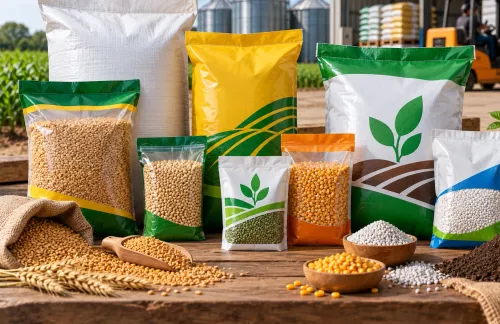
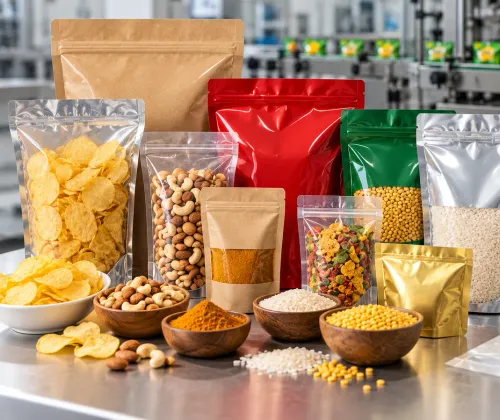
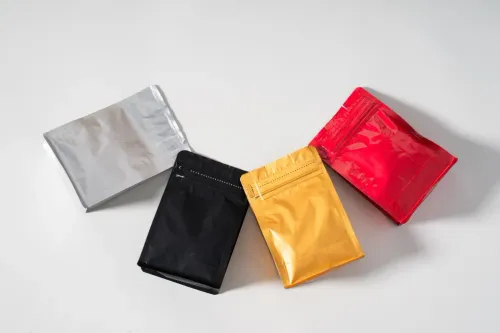
Flexible packaging is available in multiple formats, including films, liners, pouches, bags, shrink films, stretch films, plus specialized protective packaging.
The appropriate format depends on how the package moves through production.
A manufacturer should consider questions such as:
- Will the package be filled manually?
- Is automated filling equipment being used?
- Does the customer need individual retail packs?
- Is bulk transportation involved?
- Will the package be stacked?
- Is sealing performance critical?
Answering these questions before finalizing specifications can prevent packaging from becoming a bottleneck on the production floor.
Strength Needs Depend on Distribution
Packaging that performs well inside a factory may still fail during transportation if distribution conditions were not considered during selection.
Packs can experience compression, abrasion, vibration, repeated handling, temperature changes, plus stacking pressure. Industrial products may also contain sharp edges capable of puncturing an unsuitable film.
Businesses should therefore assess the complete journey from filling to final destination.
Customization Helps Match Real Applications
Standard packaging can be suitable for routine applications, but some products need customized dimensions, thickness, structures, printing, or performance characteristics.
Plastomatic Industries works with businesses seeking flexible packaging for different commercial plus industrial requirements. For companies in Nagpur as well as customers across Maharashtra, clearly communicating product details, pack dimensions, filling methods, storage conditions, plus expected quantities makes technical discussions more productive.
The right flexible packaging begins with understanding what the package must actually do. Evaluating the product, processing method, storage environment, distribution conditions, plus end-user requirements provides a stronger basis for selecting an appropriate packaging solution.